

The Mechanics of DNS Resolution: From Query to Connection
Master the hierarchical DNS process, caching mechanisms, and essential record types.
DNS Resolution Fundamentals
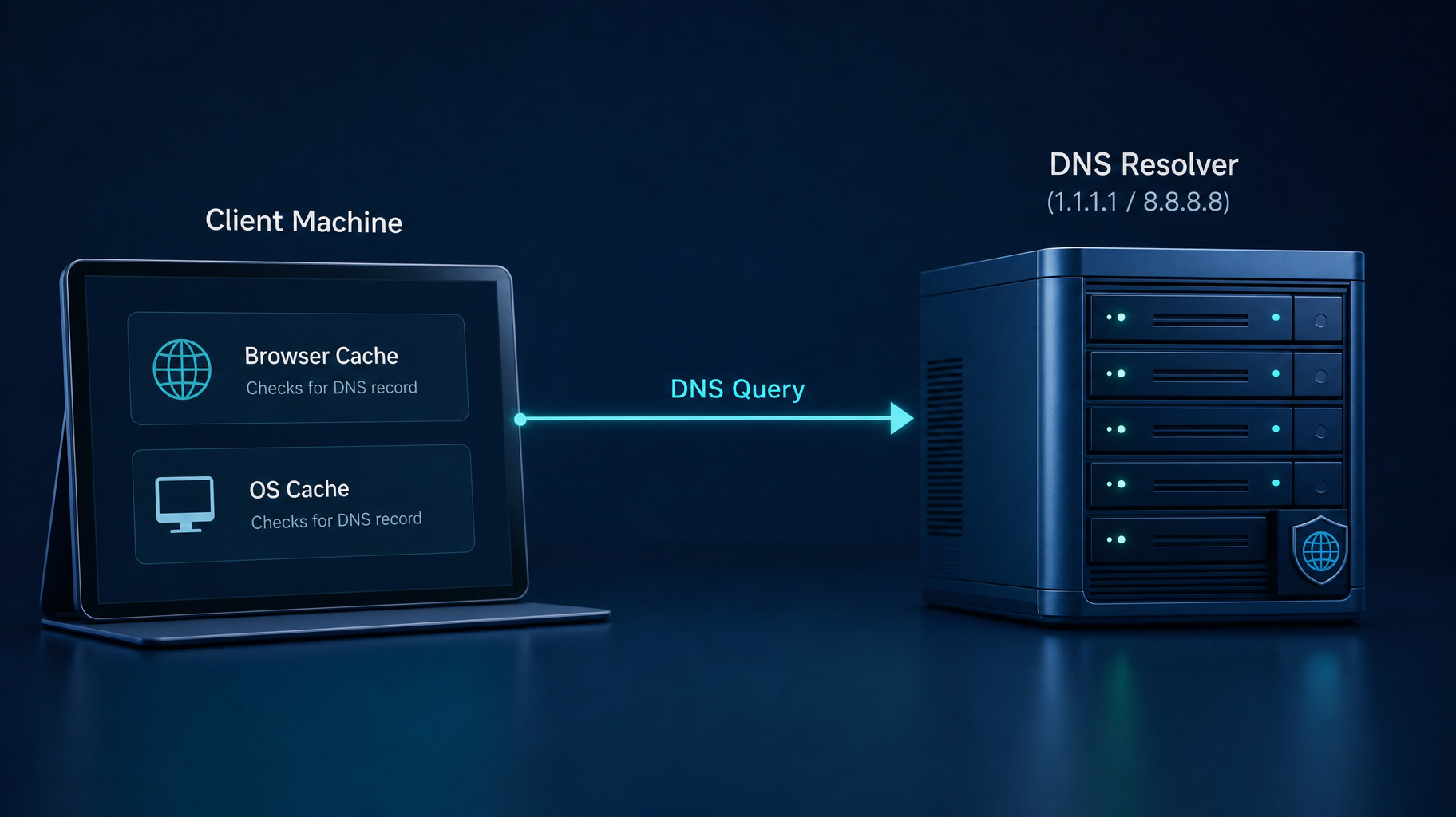
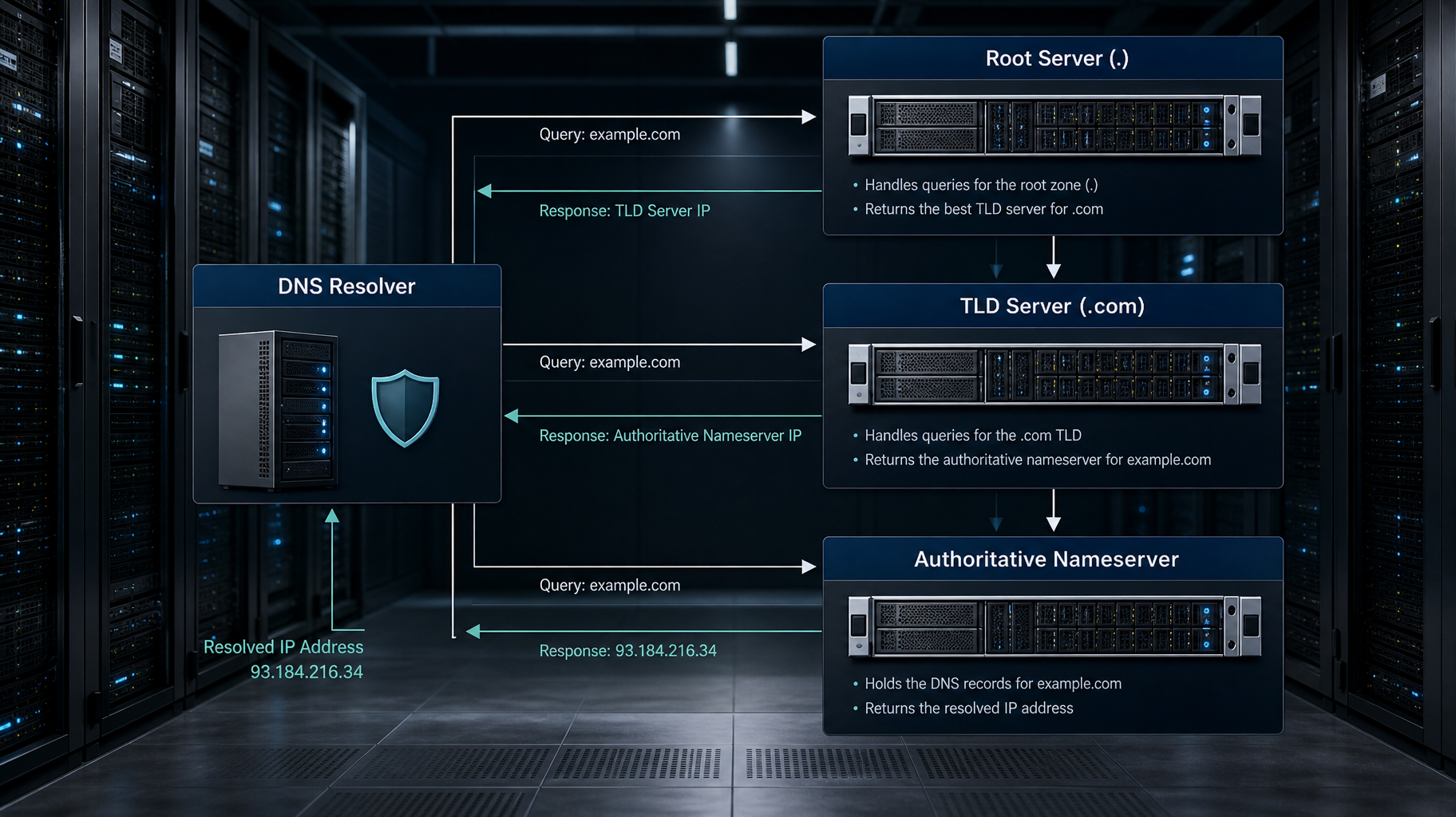
DNS (Domain Name System) is the protocol responsible for converting human-readable hostnames into machine-readable IP addresses. It functions as a distributed database, with multiple layers of servers working together to resolve queries efficiently and securely. When a user enters a hostname into a browser, the system initiates a resolution process that typically follows this sequence:

Caching and TTL Behavior
To reduce latency and minimize load on upstream servers, DNS responses are cached at multiple levels. Each DNS record includes a TTL (Time to Live) value that determines how long the record should be retained before revalidation. Caching occurs at:
- ✓Browser level
- ✓Operating system level
- ✓Resolver level
Proper TTL configuration balances performance with accuracy. Short TTLs allow for rapid updates, which is useful during migrations or DNS changes. Longer TTLs reduce query volume and improve response times but can delay propagation of updates.
Common DNS Record Types
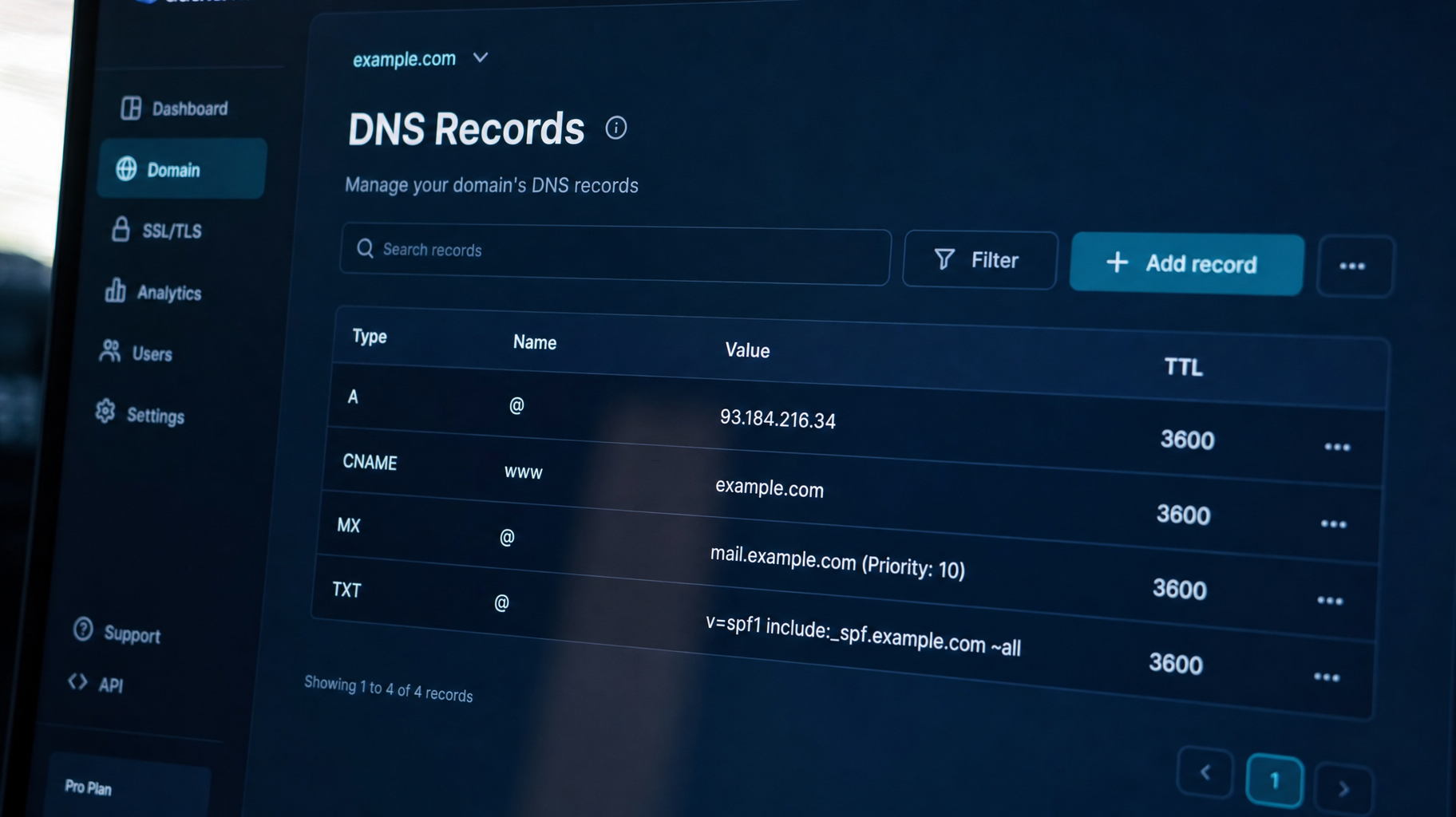
Each DNS record type serves a specific function:
- A Record: Maps a hostname to an IPv4 address
- AAAA Record: Maps a hostname to an IPv6 address
- CNAME Record: Creates an alias for another hostname
- MX Record: Specifies the mail server responsible for email delivery
- TXT Record: Used for domain verification and email security (e.g., SPF, DKIM, DMARC)
Misconfigured or missing records can result in failed resolution, email delivery issues, or security vulnerabilities.
Troubleshooting DNS Issues
DNS resolution failures can result from:
- Incorrect or missing DNS records
- Propagation delays following record updates
- Misconfigured TTL values
- DNSSEC validation errors
- Resolver timeouts or network-level blocks
Diagnostic tools such as dig, nslookup, and host can be used to trace resolution paths, inspect record data, and verify propagation status.
Use Cases and Relevance
- A developer updates DNS records and uses
digto confirm propagation across global resolvers. - A store owner changes hosting providers and must update A and CNAME records to point to the new infrastructure.
- A blogger configures email delivery and sets up MX and SPF records to ensure messages are authenticated and delivered reliably.
Key Takeaways
-
•DNS resolution is a multi-step process involving caches and hierarchical servers.
-
•TTL values determine how long DNS records are retained and affect propagation speed.
-
•DNS record types must be configured correctly to support web, email, and security functions.
-
•Troubleshooting DNS requires understanding the resolution flow and using diagnostic tools.
-
•Proper DNS configuration ensures uptime, performance, and operational integrity.